
What Is Brake-Checking? And Why Is It Dangerous?
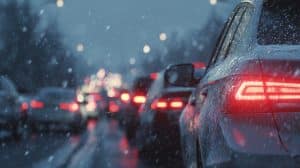 It’s normal to get annoyed or even angry while you’re driving – especially when someone is tailgating you to the point of it being dangerous. When this happens, people sometimes decide to “brake-check” the car behind them. While this may cause the person behind to stop following so closely, it doesn’t always end well. So, what is brake-checking and why is it so dangerous?
What counts as brake-checking?
Brake-checking is when a motorist abruptly hits the brakes on purpose to slow, scare, or intimidate another driver who is behind them. This is usually done specifically to surprise or intimidate the driver behind them because the leading driver is annoyed that they’re being tailgated. Brake-checking is dangerous because it can result in a trailing vehicle having to suddenly stop and swerve, which can lead to accidents.
When does braking become brake-checking?
Some braking in traffic is normal and done for legitimate reasons, like a red light, a turn, or a hazard in the road. Brake-checking becomes an issue when:
- A driver slams on their brakes without a legitimate cause, especially if another car is following closely.
- The leading driver uses their brake as a ‘revenge’ tactic or to “teach someone a lesson,” because they were tailgating.
- Sudden braking is repeated or exaggerated solely to annoy, scare, intimidate, or force the trailing driver to back off.
Brake-checking is not only dangerous – intentionally braking to intimidate another driver can lead to charges such as reckless or negligent driving. It also puts everyone at risk for rear-end collisions and chain-reaction crashes.
Maryland laws that come up in brake-check cases
When brake-checking happens on Maryland roads, several state laws can become important during insurance claims and legal cases. These rules can influence who is found at fault and what charges or liability may apply.
Following too closely
Under Maryland law, drivers are required not to follow another vehicle “more closely than is reasonable and prudent.” If a rear driver was tailgating before a collision caused by brake-checking, they may be considered partly or fully at fault for not leaving enough stopping room.
Reckless driving
Maryland’s reckless driving law applies to any driver who acts in a willful or dangerous disregard for the safety of others. Slamming on the brakes without good reason is often viewed as reckless behavior, as it puts others at immediate risk of harm.
Aggressive driving
Maryland also has an aggressive driving law, which kicks in if a person commits at least three dangerous moving violations during a single incident (such as disobeying traffic lights, improper overtaking, passing on the right, lane violations, following too closely, failure to yield, or speeding). Brake-checking combined with other bad behaviors, may qualify.
After an accident occurs, insurance companies and the court, if it gets to that point, will look at the behaviors of everyone involved and try to determine if anyone was reckless, negligent, or broke the law, which can play a part in the determination of liability.
Why is brake-checking so dangerous?
Brake-checking puts everyone on the road at risk because it can trigger serious reactions that go far beyond just damage to the two vehicles involved. This behavior often starts a chain of dangerous events that are hard to control once set in motion.
Rear-end collisions
When a driver slams on their brakes without warning, the car behind often can’t react in time. Even if a driver is paying attention, there isn’t always enough space to stop suddenly. This leads to a high chance of a rear-end crash that can cause injuries and major property damage.
Chain-reaction crashes
On busy roads or highways, unexpected braking can cause many vehicles to slam into each other in a pile-up.
Escalation
Brake-checking can lead to more anger and escalation. Drivers often shout and gesture at each other or continue to tailgate and brake-check, making the road more dangerous for everyone. Drivers could become aggressive to the point of physical violence in extreme cases. There are even instances where people have been shot over these types of road rage occurrences.
This behavior puts everyone on the road at risk and should be avoided at all costs – no matter how annoyed someone is that they’re being followed too closely.
Who is liable in a brake-checking accident?
Determining who is responsible in a brake-check accident can be complicated. It can play out in the following ways:
Front driver
If it can be proven that the driver in front deliberately brake-checked the person behind them, it’s likely that the front driver will be found responsible for the accident. This can be proven through eyewitness accounts, police reports, or even accident reconstruction in some cases.
The trailing driver who was following too closely
In most rear-end crashes, there is a rebuttable presumption that the following driver is at fault. If the trailing driver was tailgating, they may be determined to be liable even if they claim the lead driver brake-checked them.
Both drivers share responsibility.
Sometimes, accidents result from poor driving on both sides. For example, if the rear driver was aggressively tailgating and the front driver responded by brake-checking, liability may be complicated. In Maryland, however, if more than one party shares blame, the law on contributory negligence might prevent either side from recovering damages if they are found even slightly at fault themselves.
Because you can’t recover any damages if you’re partially at fault, it’s important to contact a personal injury lawyer right away to help you build your case and dispute fault.
Evidence used in these cases to prove fault
Proving who caused a brake-check accident means gathering evidence of what really happened. This usually includes some or all of the following:
Video footage and car data
Dashcam or helmet camera footage can clearly show what each driver did moments before the crash. Car “black box” data can also show information about what the driver was doing leading up to the accident in regards to speed, braking, and steering.
Witness statements and emergency reports
By getting contact information for all witnesses, lawyers and investigators can speak to anyone who saw the accident occur. This can help corroborate your version of what happened. Police reports, 911 caller logs, and recordings from first responders also provide valuable information.
Photos of the crash scene
Taking clear pictures right away helps show the conditions of the road. Some evidence could include skid marks, glass, or parts scattered on the street, and how the cars ultimately ended up.
Gathering evidence is the best way to show what really happened and who was at fault.
Dealing with tailgating can be incredibly frustrating, but brake-checking is never the answer. If you were injured because of someone’s reckless driving, you may have legal recourse and be able to collect damages. Our team can look at your case and help you determine your next steps. We’ve recovered more than $500 million for clients who have suffered injuries just like you. Contact Plaxen Adler Muncy, P.A. to schedule a free consultation.

Bruce Plaxen was honored as the 2009 Maryland Trial Lawyer of the Year by the Maryland Association for Justice, and assists victims of personal injury, car accidents and medical malpractice throughout the state. For more information on his legal background, please visit his attorney bio.